
Phosphating and Conversion Coatings for Steel
Phosphating and Conversion Coatings for Steel: a practical guide to the process decisions, inspection points and RFQ details that affect this sheet-metal part or programme.
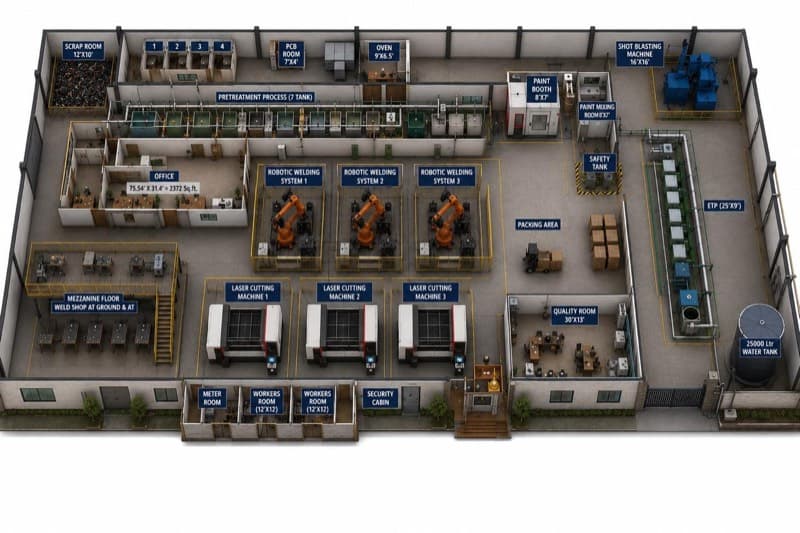
Coating durability begins before powder or paint reaches the part. Cleaning, rinsing, conversion treatment, drying, film build, curing and handling must be specified as one surface-protection system for the substrate and service environment.
Direct answer
Coating durability begins before powder or paint reaches the part. Cleaning, rinsing, conversion treatment, drying, film build, curing and handling must be specified as one surface-protection system for the substrate and service environment. For phosphating and conversion coatings for steel, the decision should be made against the finished part and its service environment, not against a machine name on its own.
What the drawing should settle
The drawing should state the material, thickness, tolerances, finish, quantity and revision because each one changes the manufacturability review. The review should cover substrate and surface contamination; The review should cover pretreatment chemistry and rinse quality; The review should cover coating type, colour and target film thickness; The review should cover cure schedule and part temperature; The review should cover edge coverage, masking and corrosion environment.
- Substrate and surface contamination should be considered before the process is selected.
- Pretreatment chemistry and rinse quality should be considered before the process is selected.
- Coating type, colour and target film thickness should be considered before the process is selected.
- Cure schedule and part temperature should be considered before the process is selected.
- Edge coverage, masking and corrosion environment should be considered before the process is selected.
Topic-specific checks
For Phosphating and Conversion Coatings for Steel, the finish specification should name the substrate, preparation, coating system, colour, film build and acceptance method. A colour name alone does not define corrosion protection, and a visual check alone does not prove adhesion or cure.
Masking, racking and handling should be shown on the drawing when they affect fit or electrical contact. The finished-part inspection should include the faces most likely to be damaged during packing and the edges most likely to expose the substrate.
Process and inspection
A coating acceptance plan should state the measured film thickness, colour tolerance, adhesion method, cure condition and visual limits. Outdoor service claims should be tied to the actual substrate, coating system and test requirement rather than a generic promise of durability. A supplier can only quote the route responsibly when the acceptance criteria are visible before production starts.
| Decision | Why it changes the route |
|---|---|
| Material and thickness | They affect forming, welding, cutting speed and finish preparation. |
| Quantity and release pattern | They determine whether flexibility or dedicated tooling is the better investment. |
| Critical interfaces | They define the inspection datums and the cost of rework. |
| Surface requirement | It determines pretreatment, masking, handling and acceptance checks. |
Cost and sourcing choices
The lowest unit price is not always the lowest programme cost. A quote should make tooling, setup, material utilisation, secondary operations, inspection and packing visible enough for two suppliers to be compared on the same basis. If a design is likely to change, avoiding an early irreversible tool can be sensible; if the geometry is stable and the releases are substantial, a controlled tool or fixture may reduce variation and operator time. The correct comparison is the full part life, including changes, rework, delivery and the cost of handling the assembly at the next operation.
Implementation note
Phosphating and Conversion Coatings for Steel should be released with an agreed inspection point at the first operation that can make the feature difficult to recover. For repeat work, retain the approved sample or an agreed inspection record. Future operators and suppliers need a reference that shows the accepted appearance, fit and measurement method. This matters especially when the part is made across different shifts or plants.
When a requirement is not yet known, it is better to state the assumption than to hide it in the unit price. A clear assumption can be approved, changed or removed; an unspoken assumption usually appears later as rework, delay or a disputed acceptance decision. The record should remain attached to the revision that was actually quoted, not copied forward without checking whether the material, finish or assembly has changed.
A practical review should separate the requirement from the preferred manufacturing method. If the drawing changes after the first sample, record which features are still open and which are frozen. That avoids paying for a mature production solution before the design has earned one. This is also the point where the buyer can decide whether a prototype route, a repeat-production route or both should be priced.
RFQ checklist
- What environment will the part see?
- Which standard or customer specification applies?
- What film thickness range is required?
- Which faces or threads need masking?
- What evidence accompanies the finished batch?
Ganesh Multitech route
Ganesh Multitech can review the drawing against a route that may include paint shop, followed by the relevant forming, welding, finishing and inspection steps. The scope should be confirmed against the actual drawing and plant requirement rather than assumed from the article. Send the current revision, expected quantity, material, finish and delivery destination so the engineering team can return a quotation with the important assumptions visible.
Have a drawing ready for review?
Send the current revision, material, finish and expected quantity. Our engineering team will review the manufacturing route before quotation.
Request a quote