
Why an elevator counterweight frame is harder than it looks
Why an elevator counterweight frame is harder than it looks: a practical guide to the process decisions, inspection points and RFQ details that affect this sheet-metal part or programme.
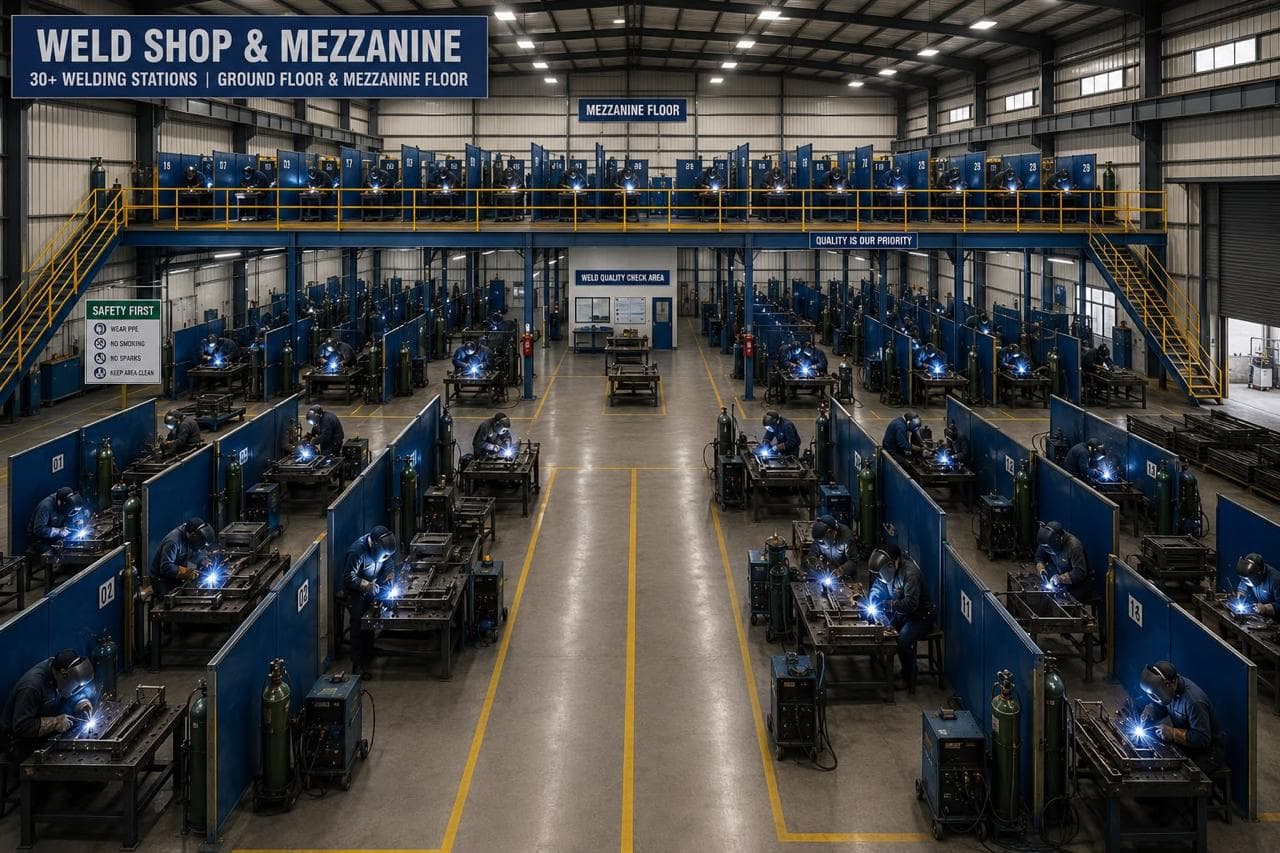
Lift components need geometry control because their installation depends on repeatable frames, brackets and panel interfaces. The part should be reviewed as part of the lift assembly, including locating surfaces, weld distortion, coating and handling.
Direct answer
Lift components need geometry control because their installation depends on repeatable frames, brackets and panel interfaces. The part should be reviewed as part of the lift assembly, including locating surfaces, weld distortion, coating and handling. A practical manufacturing review records assumptions so the buyer can challenge or approve them before the order is released.
What the drawing should settle
For why an elevator counterweight frame is harder than it looks, the decision should be made against the finished part and its service environment, not against a machine name on its own. The review should cover assembly datums and guide or mounting interfaces; The review should cover frame diagonals and hole patterns; The review should cover weld sequence and fixture control; The review should cover coating requirements for the shaft environment; The review should cover packing and protection of finished faces.
- Assembly datums and guide or mounting interfaces should be considered before the process is selected.
- Frame diagonals and hole patterns should be considered before the process is selected.
- Weld sequence and fixture control should be considered before the process is selected.
- Coating requirements for the shaft environment should be considered before the process is selected.
- Packing and protection of finished faces should be considered before the process is selected.
Topic-specific checks
For Why an elevator counterweight frame is harder than it looks, the most useful comparison is between the approved drawing and the delivered assembly. Look for the features that affect installation, service access, corrosion exposure and interchangeability. These are the features that deserve explicit controls in the quotation and inspection plan.
If the product will be sourced across plants or countries, preserve the same revision, acceptance criteria and packing instructions at every release. Consistency is created by records and datums, not by a supplier label alone.
Process and inspection
Dimensional reports should use the same datums as the customer drawing. Record diagonals, mounting-hole locations, critical clearances and coating condition, and keep the approved first-article record with the production revision. The drawing should state the material, thickness, tolerances, finish, quantity and revision because each one changes the manufacturability review.
| Decision | Why it changes the route |
|---|---|
| Material and thickness | They affect forming, welding, cutting speed and finish preparation. |
| Quantity and release pattern | They determine whether flexibility or dedicated tooling is the better investment. |
| Critical interfaces | They define the inspection datums and the cost of rework. |
| Surface requirement | It determines pretreatment, masking, handling and acceptance checks. |
Cost and sourcing choices
The lowest unit price is not always the lowest programme cost. A quote should make tooling, setup, material utilisation, secondary operations, inspection and packing visible enough for two suppliers to be compared on the same basis. If a design is likely to change, avoiding an early irreversible tool can be sensible; if the geometry is stable and the releases are substantial, a controlled tool or fixture may reduce variation and operator time. The correct comparison is the full part life, including changes, rework, delivery and the cost of handling the assembly at the next operation.
Implementation note
Why an elevator counterweight frame is harder than it looks should be released with an agreed inspection point at the first operation that can make the feature difficult to recover. When a requirement is not yet known, it is better to state the assumption than to hide it in the unit price. A clear assumption can be approved, changed or removed; an unspoken assumption usually appears later as rework, delay or a disputed acceptance decision.
A practical review should separate the requirement from the preferred manufacturing method. If the drawing changes after the first sample, record which features are still open and which are frozen. That avoids paying for a mature production solution before the design has earned one. The record should remain attached to the revision that was actually quoted, not copied forward without checking whether the material, finish or assembly has changed.
The quotation should also identify the hand-off between operations. A cut blank may be acceptable at one stage and unusable after forming, welding or coating if the next datum was not protected. Defining that hand-off is a simple way to reduce arguments about where a defect began. This is also the point where the buyer can decide whether a prototype route, a repeat-production route or both should be priced.
RFQ checklist
- Which interfaces control installation?
- Is the frame supplied as a complete weldment?
- What surface protection is required?
- Which dimensions need a report?
- How should finished frames be packed?
Ganesh Multitech route
Ganesh Multitech can review the drawing against a route that may include welded assemblies, followed by the relevant forming, welding, finishing and inspection steps. The scope should be confirmed against the actual drawing and plant requirement rather than assumed from the article. Send the current revision, expected quantity, material, finish and delivery destination so the engineering team can return a quotation with the important assumptions visible.
Have a drawing ready for review?
Send the current revision, material, finish and expected quantity. Our engineering team will review the manufacturing route before quotation.
Request a quote