Key takeaways
- A Z275 coating adds 19.3 µm per face, so a 0.20 mm clearance joint loses 38.6 µm to the coating before any tolerance stack is counted.
- Galvanised sheet loses on draw ratio above about 1.6, on fits below 0.15 mm, on visible painted faces and on leak-tight welds; each of those has a cheaper substrate than a thicker coating.
- Above 3 mm, hot-dip galvanising after fabrication beats galvanised sheet: 55–70 µm all over, including cut edges and welds, against 19.3 µm on the faces only.
- Hot-dip galvanising at 445–460 °C warps 1.5 mm panels and closes an M8 thread by 110 µm, so thin or threaded parts belong in CRCA with a powder coat.
- Zinc is 3.5% of the mass of a 1 mm sheet at Z275 and 1.75% at 2 mm, so the coating premium per tonne halves as the gauge doubles.
Galvanised steel is the default answer for anything that lives outdoors, and that default is wrong often enough to be worth a checklist. A zinc coating changes the surface by 7–31 µm per face, changes the bend behaviour, changes the weld, and changes the fit. On a part where none of those matter, it is the cheapest protection available. On a part where two of them matter, the coating is the problem.
The failures are consistent. A cover that will not close because the powder on the galvanised faces has used up the clearance. A draw that splits at the second stage because the coating grade was not a drawing grade. A welded frame that rusts along every bead because the zinc was burned away and nobody primed it. A thread that will not take a bolt after galvanising.
This page is for the procurement engineer comparing a galvanised route against the alternatives on a live drawing. It gives the six signals that mean galvanised sheet is the wrong substrate, the arithmetic behind each, and the route that wins instead.
When is galvanised steel the wrong material for a part?
Six conditions cover almost every case. Any one of them is a reason to question the specification; two together usually settle it.
Draw ratio above about 1.6. The coating cracks and flakes at the punch nose, and the flakes end up in the die. A deeper draw belongs in CRCA with a coating applied after forming.
A fit or joint clearance below 0.15 mm. Two galvanised faces at Z275 add 38.6 µm to the stack, and a powder coat on top adds another 120–160 µm. A clearance designed for bare steel closes.
A visible painted face. Zinc under a thin paint film shows spangle, telegraphs the substrate texture, and reacts with the wrong primer. A Class A face wants a smooth, phosphate CRCA or a pre-painted coil.
A leak-tight or pressure-tight weld. Zinc boils at 907 °C and leaves porosity in the bead. A joint that has to hold air or oil is welded in CRCA or stainless.
A thin panel below 0.8 mm. The coating is a large fraction of the wall, bend radii get tight in absolute terms, and the part dents in handling before the zinc has done any work.
A section above 3.0 mm. Zinc-coated coil is not made in that range for most buyers, so the choice becomes hot-dip galvanising after fabrication, which is a different process with different allowances.
There is a seventh signal that is not about the part at all: a dissimilar-metal joint. A stainless fastener in a wet galvanised joint makes the zinc the anode of a large cathode, and the coating around the fastener is consumed first. The fix is a galvanised or zinc-flake fastener, or an isolated joint.
What does the coating thickness do to a fit?
It closes it. Take a slot-and-tab joint designed at 0.20 mm total clearance on bare 1.5 mm sheet. At Z275, each face gains 19.3 µm, so two coated faces take 38.6 µm out of the joint and leave 161 µm. That still assembles.
Now add a powder coat at 70 µm per face. The same joint loses another 140 µm and has 21 µm left, which is inside the flatness tolerance of a 600 mm panel and will not assemble without force. At Z450 the zinc alone takes 63 µm, and at that point a joint drawn for bare steel has lost a third of its clearance to the coating.
The arithmetic is worse for a press fit or a bearing seat, where the coating cannot be present at all. Those features need masking, and masking has to be on the drawing with a dimension, not in a note that says "mask where required".
Which alternative wins for each failure?
The replacement is decided by which property failed, not by which material is cheaper per kilogram. The table maps the six signals to the route we quote.
| Signal on the drawing | Why the zinc coating fails | Better route | Ganesh limit or note |
|---|---|---|---|
| Draw ratio above 1.6 | Coating cracks and flakes at the punch nose | CRCA DD grade, powder after forming | Deep drawing, 20–300 T presses |
| Clearance below 0.15 mm | 38.6 µm per joint at Z275, plus film | CRCA with masked or machined pads | Formed to ±0.5 mm typical |
| Visible painted face | Spangle and primer reaction under thin film | CRCA, or pre-painted coil | 18 ft × 14 ft powder booth |
| Leak-tight weld | Zinc vapour porosity in the bead | CRCA welded then coated, or 304 | Three CLOOS robotic MIG cells |
| Panel below 0.8 mm | Coating is a large share of the wall | CRCA 0.8–1.2 mm, powder | Custom range starts at 0.8 mm |
| Section above 3.0 mm | No coil product at that gauge | Hot-rolled steel, hot-dip after fabrication | 12 kW laser to 20 mm |
| Stainless fastener in a wet joint | Zinc is the anode, consumed at the joint | Zinc-flake fasteners, or isolated joint | Hardware specified by the OEM |
Below 3 mm the alternative is almost always cold rolled sheet with a coating applied after fabrication, because that route separates the two jobs: the steel is formed in its most formable state, and the protection is applied to the finished geometry, edges included. Above 3 mm the alternative is hot-rolled steel hot-dip galvanised after fabrication, for the same reason at a different scale.
Is post-fabrication hot-dip galvanising better than galvanised sheet?
For anything above 3 mm or anything welded, yes. ISO 1461 sets a minimum average coating of 55 µm for sections from 3 to 6 mm and 70 µm above 6 mm, against 19.3 µm on a Z275 face. The coating covers the cut edges, the weld and the inside of a box section, which the coil coating never touches.
It also costs something the coil route does not: heat. The bath runs at 445–460 °C, which relieves the stress in cold-formed sections, warps panels under about 3 mm, and changes flatness on anything long. A 1.5 mm door panel that goes through a galvanising bath comes back with a wave in it that no amount of adjustment removes. That is why thin panels are not galvanised after fabrication, and why a thin panel that needs zinc is bought as galvanised coil instead.
Threads are the second penalty. At 55 µm per surface, an M8 thread closes by 110 µm across the flanks, which is more than its clearance. The drawing has to say whether the thread is cut oversize, chased after galvanising, or plugged. Vent and drain holes of 8–10 mm are needed in any closed section, placed where the zinc can run in and out.
Where does the coating premium sit in the mass and the cost?
The zinc is a small part of the sheet. At Z275, one square metre of 1 mm steel weighs 7.85 kg and carries 0.275 kg of zinc, which is 3.5% of the mass. At 2 mm the same coating is 1.75%, and at 3 mm it is 1.17%.
That matters for two reasons. First, the coating premium per tonne is roughly proportional to the coating mass divided by the steel mass, so it halves when the gauge doubles: a buyer comparing a 1 mm galvanised part with a 2 mm one is not comparing the same premium. Second, a heavier coating buys life in proportion to its thickness, but it also buys bend limits in proportion to its thickness, so the part that pays the most for corrosion protection is the part with the least forming freedom.
The mass argument also runs the other way for aluminium. A 5052 cover at 2,700 kg/m³ weighs about a third of the same steel part before the thickness correction, and it needs no zinc at all because the oxide film is the protection. Where the part is hand-lifted and the exposure is C3, aluminium often beats both steel routes on total cost once the coating operations are counted.
What changes on the drawing when the part moves to CRCA?
Five callouts change, and four of them are dimensional. The substitution is rarely a one-word material swap, and the fit is the callout that catches people out.
The bare galvanised part added 38.6 µm per joint at Z275. The CRCA replacement adds nothing in the white, but the powder coat that replaces the zinc adds 70 µm per face, which is 140 µm per joint — nearly four times the coating the galvanised part carried. A joint that was comfortable on bare galvanised sheet is a press fit on coated CRCA. Either the clearance opens up, or the powder is masked at the mating face, and both have to be on the drawing before the blank is cut.
The bend rule relaxes. A galvanised part needed 1.0t inside radius to keep the coating out of its crazing band; CRCA bends to 0.5t and the film follows the radius. The weld instruction changes with it: no grind-back for zinc, but every weld now sits under the coating and has to be clean and dry before it goes to the booth. The cut edge stays bare in both routes, which is why the deburr radius and the edge-sealing note carry across unchanged.
Life is where the substitution is not neutral. A bare Z275 panel gives 4.6–9 years at C4; a CRCA panel with 70 µm of powder gives 5–8 years on the face but nothing at a scratch, because there is no zinc to sacrifice. That is the trade: the CRCA route holds colour and repairs in the field, and the galvanised route keeps protecting the steel where the finish is broken.
What Ganesh runs, and what it does not
Galvanised and cold rolled work runs on the same equipment: a 12 kW fibre laser on a 40 ft × 16 ft bed to 20 mm, 6 kW and 3 kW support machines, presses from 20 T to 300 T with 250 T punching capacity, and a 200 T, 5-axis press brake with a 4,450 mm bed forming to 10 mm on a Delem control. Welding is three CLOOS robotic MIG cells and 30+ manual MIG, MAG, spot and SPM stations, with fixtures designed and built in the in-house tool room alongside the press tools.
Coating runs through a seven-tank pretreatment line, a 16 ft × 16 ft shot blast chamber, an 18 ft × 14 ft electrostatic powder booth and a wet paint booth with a curing oven, with dry film thickness and cross-hatch adhesion recorded. The company has fabricated since 1992, holds ISO 9001:2015 and ISO 14001:2015, and works across five units in Mumbai (Vasai) and Nagpur. Custom parts run from 0.8 mm to 40 mm in mild steel, CRCA, stainless, aluminium, brass and copper, formed to ±0.5 mm typical, with PPAP and first article inspection available.
We do not hot-dip galvanise in-house. We do not anodise aluminium, we do not run a coil coating line, and we do not heat treat after forming. Where the drawing needs any of those, the part is made here and the coating is bought out, and the quotation says so rather than absorbing the transport leg and the distortion risk.
What to put on the drawing
- Substrate and grade, with the coating designation and mass for coil, or the ISO 1461 class for a fabricated part.
- Thickness with its tolerance class, and the faces that carry a fit.
- The draw ratio or cup depth for any formed feature, and the inside bend radius at every bend.
- Every joint clearance, stated against the maximum coating build rather than the nominal.
- Features that must be masked or left bare, with a dimension and a finish.
- Weld process and symbols, and whether the joint is leak tested.
- Thread specification, with the tapping allowance, chasing or plugging instruction.
- Vent and drain holes for any closed section, with size and position.
- Exposure category and the finish system on top, if any.
- General tolerance class to ISO 2768-1, with any tighter geometric callout.
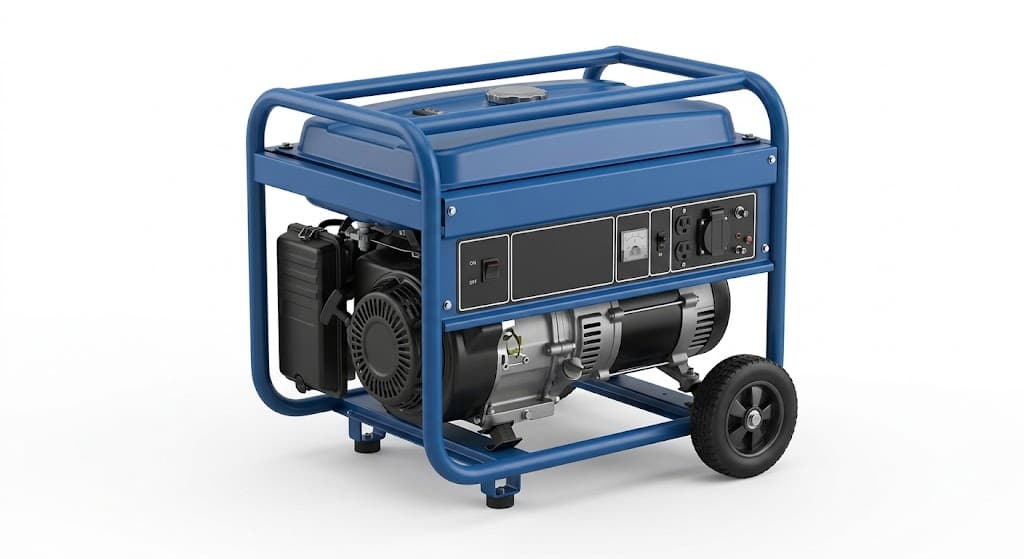
Send the drawing with the current material and the failure you are trying to avoid to request a quote. The materials and grades hub lists the grade and coating guides, the galvanised sheet selection guide covers coating mass and bend limits in detail, and the welded genset base frame guide shows the fabricated route for the heavy-gauge parts that galvanising suits best. Forming capacity for thin sheet is on the sheet metal bending page.
Frequently asked questions
When should a part be powder-coated CRCA instead of galvanised sheet?
When the face is visible, the joint clearance is below 0.15 mm, or the part is drawn deeper than a 1.6 draw ratio. A CRCA part at 2 mm with a 60–80 µm powder coat gives a better surface, a tighter fit and a repairable finish.
Can galvanised steel be used for a welded frame?
It can be welded, but the coating is destroyed 5–10 mm either side of every bead and the joint needs re-protection. Below 3 mm, a CRCA frame welded and then powder coated is cheaper and cleaner; above 3 mm, fabricate in hot-rolled steel and galvanise after welding.
Does galvanising close threads?
Yes. A hot-dip coating at 55 µm per surface adds 110 µm across an M8 thread, which is more than the thread clearance. Threads are either cut oversize, chased after galvanising, or protected with a plug; specify which one on the drawing.
Is pre-painted steel a better choice than galvanised steel plus paint?
For flat and simply folded parts, often yes: the coil is coated under controlled conditions and the finish is uniform. It loses at bends, cut edges and welds, where the paint film is damaged and cannot be repaired as easily as a post-coated part.
What thickness of galvanised sheet is practical?
Roughly 0.8–3.0 mm for formed parts. Below 0.8 mm the coating is a large fraction of the wall and the bend radii get tight; above 3.0 mm the coil product runs out and post-fabrication hot-dip galvanising takes over.
Do you galvanise in-house?
No. Ganesh cuts, forms, welds, blasts, pretreats and coats in-house, and hot-dip galvanising is bought out from a specialist plant. That means the distortion and thread allowances have to be designed in before the part is fabricated.
Sources and further reading
- ISO 1461 — Hot dip galvanised coatings on fabricated iron and steel articles: thickness classes, thread and venting requirements · reviewed 3 Nov 2026
- ASTM A653/A653M — Steel sheet, zinc-coated by the hot-dip process: coating designations and forming grades · reviewed 3 Nov 2026
- ISO 12944-5 — Protective paint systems for steel structures: system selection by corrosivity category and durability · reviewed 3 Nov 2026
Not sure whether the part should be galvanised?
Send the drawing with the joint clearances, weld locations and the service environment. We will price the galvanised route against CRCA and post-fabrication hot-dip before the tool is cut.
Request a quote